
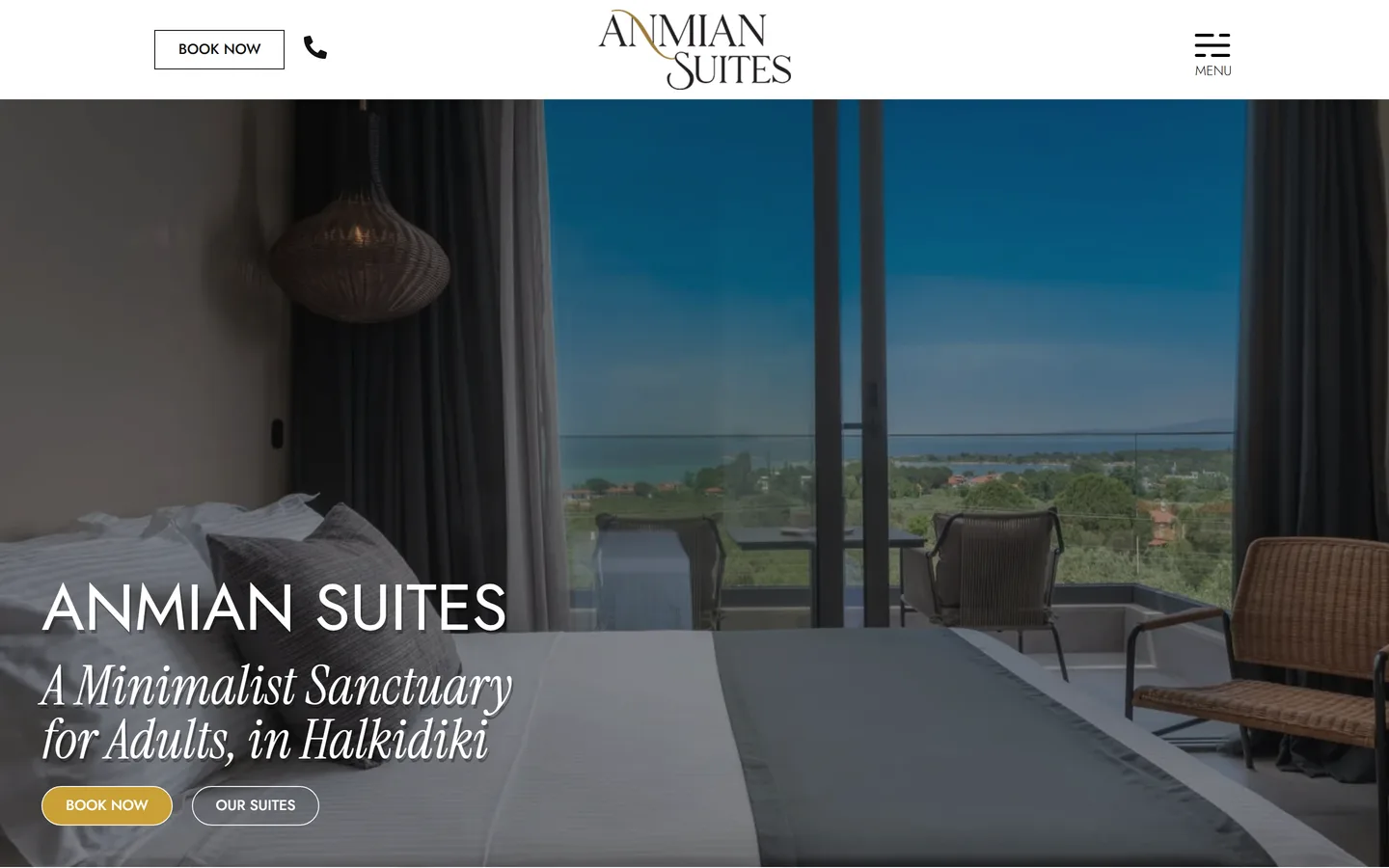
 Hotel
Hotel Hotels · Hotel Ads, Search & Meta
Google Hotel Ads, Search & Meta: hotel advertising measured per booking
Your own rate next to Booking.com, at the moment the traveller compares. Google Hotel Ads and Free Booking Links fed from your booking engine, Search campaigns on your name and your destination, Performance Max and Meta for inspiration and retargeting, all measured in bookings, not clicks.
Hotel Ads & Free Booking Links Search · Performance Max · Meta GA4 & Consent Mode v2
2,000+Meta & Google campaigns
15–25%typical OTA commission per booking
Hotel advertising has a peculiarity no other sector has: in the Google auction you compete against the OTAs that sell your own room. Booking.com bids on your name, shows your rate in Google Hotel Ads and keeps 15% to 25% of the booking of a traveller who searched for you by name. Proper hotel advertising starts there: making sure your own rate is present at every point of comparison.
The channels are well known: Google Hotel Ads and Free Booking Links for the price box, Search campaigns for your name and for destination terms, Performance Max for travel goals, Meta for the inspiration phase and for retargeting people who looked at rooms and did not book, and the other metasearch engines such as Trivago and TripAdvisor. The question is not which channel, but in which order, with what budget per period and with what measurement.
At Qbrains we have run more than 2,000 campaigns on Meta and Google since 2000, and we work with hotel businesses from Hilton Athens and The Met Hotel to seasonal properties in Thassos. Below we explain how your rate reaches Google, how you pay, which campaigns complement Hotel Ads, why rate parity decides the outcome and how cost per booking is measured.
How do Google Hotel Ads work?
When someone searches for your hotel or for accommodation at your destination, Google shows a box with dates, nightly rates and availability, in search, on the maps and inside your Google Business Profile. The rates shown there are not yours by default: they come from the OTAs that sell your room. In other words, Booking.com advertises your property on top of your own name, with its own rate and its own button.
To get into that box yourself, you need a rate and availability feed from your own systems to Google Hotel Center. The chain is usually: the PMS holds rates and availability, the channel manager or booking engine synchronises them, and a connectivity partner (or the booking engine itself, if certified) sends them to Hotel Center in real time. From there Google displays them as Hotel Ads (paid positions) and as Free Booking Links (free, organic positions) next to the OTA rates.
When the traveller clicks your rate, they land in your booking engine with dates and number of guests already filled in, one step before completion. That is why Hotel Ads usually have the lowest cost per booking of any channel: they catch the user at comparison, not at inspiration. The same logic applies to the other metasearch engines, Trivago, TripAdvisor and Kayak, where the hotel can show its own rate through the same connectivity partner.
How do you pay: per click, per stay or not at all?
Free Booking Links cost nothing. They are the organic position of your rate below the paid ones, and they need only the feed. They are the foundation: without them, every other move starts from a disadvantage.
In Hotel Ads the classic charge is per click (CPC), either with a manual bid or as a percentage of the room rate. You pay every time the user taps your rate, whether or not they book. It is transparent and controllable, but it moves the conversion risk to you, which is why it needs a good booking engine and a competitive rate to pay off.
Commission-based charging, per completed booking or per stay actually taken (pay-per-stay), resembles the OTA model but at a lower percentage and with the guest as your own customer. You pay only for bookings that happened, and with pay-per-stay only for those that were not cancelled. It is the safest model for smaller properties, where available: Google is gradually restricting commission models in favour of automated bidding towards a return target (target ROAS, maximise conversion value), while many connectivity partners and the other metasearch engines, Trivago and TripAdvisor, still offer per-booking models. Which one suits you depends on your size, seasonality and cancellation rate. We work it out with your own numbers, not with generic advice.
Which campaigns complement Hotel Ads?
Hotel Ads catch the traveller at comparison. The other channels bring them there, or bring them back when they left.
Search on your own name
The first campaign we set up almost every time. It goes after the people who already search for you by name and whom you lose because an OTA ad sits above your organic result. The cheapest click you will ever buy, and the most expensive commission you will ever save.
Search on the destination
"Halkidiki hotel with pool", "Thassos beachfront hotel", "family hotel Halkidiki". Booking-intent terms where you compete against the OTAs in the auction. They work with landing pages per room type or need, not with the home page.
Performance Max for travel goals
The version of Performance Max that uses your Hotel Center listing as its feed and shows the property across Search, YouTube, Display, Discover and Maps with automated optimisation. It works well when booking tracking is right; otherwise it optimises for the wrong thing.
Meta for inspiration
Facebook and Instagram work in the months when the traveller is dreaming and has not chosen a destination. Reels and carousels of the property and the area, to audiences per market (Germany, UK, Balkans), aimed at site visits and sign-ups for early-booking offers.
Retargeting non-bookers
The visitor who checked availability for specific dates and left is your warmest audience. With booking-engine events flowing to Meta through the Conversions API, we show them the room they looked at and the direct-booking benefit, for a few days, not for months.
Metasearch beyond Google
Trivago, TripAdvisor and Kayak show the same rate comparison to a different audience, especially in the German-speaking market. Your rate gets there usually through the same connectivity partner. We add them once Google Hotel Ads has proved that the booking engine converts.
Why does your rate have to be competitive for Hotel Ads to convert?
In Google's price box the traveller sees your rate and Booking.com's rate for the same room, the same dates, one under the other. If yours is higher, even by a few euros, the click goes to the OTA and the commission goes with it. No amount of budget fixes that. So before we open any campaign we check rate parity: whether the public rate on your website is equal to or better than the one the OTAs show, on typical high- and low-season dates.
Parity breaches are rarely your own decision. They usually come from wholesalers reselling contracted rates to smaller OTAs, from visibility discounts the OTA itself switches on (Genius, Preferred, mobile rates) or from poor synchronisation in the channel manager. We find them and tell you where to intervene. And because OTA contracts often do not allow a lower public rate, we build the direct-booking benefit where it is allowed: member or logged-in rates, breakfast, free cancellation, late check-out, transfer, a room upgrade when availability allows. That benefit is written on the landing page and inside the booking engine, so the user who arrived from the Hotel Ad sees it before comparing again.
Free for hotels & accommodation
Free Hotel Ads & Free Booking Links check
Within 48 hours we send you what appears in Google's price box for your property, who is bidding on your name and what is missing for your own rate to be there.
What you get
- Whether you have Free Booking Links active and whether your rate appears next to the OTAs
- Which OTAs bid on your name on Google and what the traveller sees first
- Rate parity check on Booking.com and Expedia for three typical dates
- Tracking check: GA4 on the booking engine, Consent Mode v2, Meta Conversions API
When is the budget spent relative to the booking window?
Every campaign works at a different distance from the arrival date, and the budget has to follow your guests' booking window, not the accounting calendar. For a seasonal property with stays in July and August, the German guest dreams in January, compares in February and March and books by April. The Meta inspiration campaign therefore has to run four to six months before arrival, destination Search two to four months before, and Hotel Ads with retargeting in the final weeks, when the user has dates in hand. Greek guests book much closer to arrival, so the Greek audience needs its own timing, from May onwards.
A city hotel in Thessaloniki lives at a different pace: a booking window of a few days to two weeks, demand all year with peaks around the Thessaloniki International Fair, conferences and exhibitions. There the budget is spread evenly across brand Search and Hotel Ads, with increases scheduled before each event. The mistake we see most often is the reverse: budget that starts in June for August bookings, when the foreign markets have already booked, and stops in September, when the first searches for next year begin.
How do we measure cost per booking?
A hotel account is not judged by cost per click or by the number of clicks. It is judged by cost per booking and by booking value, which differs dramatically between two off-season nights and ten nights in August. To measure it, the booking engine has to "talk" to the measurement tools: we set up GA4 with cross-domain tracking between the website and the booking engine, so the hand-over does not count as a new visit, and we record the booking-flow events, from the availability search to the completed booking with its value in euros.
That value flows back to Google Ads as conversion value and to Meta through the Conversions API, so that automated bidding optimises for revenue rather than for cheap, small bookings. Consent Mode v2 is mandatory for advertising in the European Union: correctly configured, measurement stays lawful and Google models the bookings of users who declined consent instead of losing them. Without it, campaigns "see" fewer bookings than actually happen and optimise the wrong way.
The monthly report we deliver compares each campaign's cost per booking with the commission you would have paid the OTA for the same booking, shows the direct share of total bookings and how it moves month by month. See our Ads Playbook for our general methodology on Meta and Google.
How do we set up a hotel's advertising?
In an order that starts with the free and the most certain, and moves to the more expensive when the numbers justify it.
1
Price box & parity audit
What appears today in Hotel Ads for your name, who is bidding, whether Free Booking Links exist, and whether your rate is equal to or better than the OTAs on typical dates. In parallel we check the booking engine, speed and the booking flow on mobile.
2
Connection to Hotel Center
Activating the rate feed through the booking engine, channel manager or connectivity partner, verifying the listing in your Google Business Profile and checking that the rates reaching Google are correct in every language and currency.
3
Tracking before every euro
GA4 with cross-domain into the booking engine, booking events with value, Consent Mode v2, Google Ads conversions and the Meta Conversions API. We do not open a campaign before seeing a test booking recorded correctly.
4
Free Booking Links, brand, Hotel Ads
First the free positions. Then Search on your own name. Then Hotel Ads with the charging model that fits your size. At every step we look at cost per booking before moving on.
5
Destination, Performance Max, Meta
Search campaigns for destination terms with landing pages per need, Performance Max for travel goals once tracking is mature, Meta for inspiration per market and retargeting of non-bookers, timed to the booking window.
6
Monthly report & next season
Cost per booking per campaign and market, comparison with OTA commission, direct share. After every season we rewrite the budget calendar with your guests' actual booking windows.
Your own rate, next to Booking.com
Request a proposal for Google Hotel Ads, Search and Meta based on your booking engine, your booking window and your markets.
Request a Proposal →Frequently asked questions about hotel advertising
What hoteliers ask us before we start.
What are Google Hotel Ads and how do they differ from regular Google Ads?
Google Hotel Ads are Google's metasearch: the box with dates, nightly rates and availability that appears in search, on the maps and inside a hotel's Google Business Profile. Instead of ad copy, they show your actual rate next to the rate of Booking.com and Expedia, and take the user to your booking engine with the dates already filled in. To appear there, your booking engine has to send rates to Google Hotel Center.
What are Free Booking Links and do they cost anything?
They are the free, organic listing of your own rate inside the same Google price box, below the paid Hotel Ads positions. You pay neither per click nor commission. All that is needed is an active price feed from your booking engine or connectivity partner to Hotel Center. Most Greek properties have never activated them and leave the box to the OTAs alone. It is the first thing we set up.
How much budget does a hotel need for advertising?
There is no right number without your own data. The budget follows from three things: how many additional bookings you want per month, the average booking value (ADR times nights) and which cost per booking is acceptable compared with the 15% to 25% commission you pay the OTA for the same booking. From there we calculate a monthly budget per campaign and per period, and we review it every month against the real numbers.
Why does Booking.com appear above my website when people search my name?
Because it bids on your name. OTAs run Search ads on the names of thousands of hotels and, in Hotel Ads, advertise your room at their own rate. When the traveller who discovered you elsewhere searches your name, they see the OTA first and you pay commission on a guest you had already won. A Search campaign on your own name and your own rate in Hotel Ads is the cheapest way to stop it.
Do I need a booking engine to run Hotel Ads?
Yes. Hotel Ads and Free Booking Links show real rates and availability, so a source has to send them to Google in real time: your booking engine, your channel manager or a connectivity partner linked to Hotel Center. The booking engines common in the Greek market support this. If you do not have a booking engine yet, start with our page on direct bookings and the booking engine.
How do you measure bookings from the campaigns?
We set up GA4 with cross-domain tracking between the website and the booking engine, so the completed booking is recorded as an event with its value and sent back to Google Ads and Meta as a conversion. With Consent Mode v2 the measurement stays lawful in Europe and Google models the bookings of users who declined consent. The report therefore states cost per booking and revenue per campaign, not clicks.
When should campaigns start for the summer season?
Earlier than most people think. Germans and Britons book summer holidays from January to April, so Meta campaigns for inspiration and destination Search campaigns need to run in winter. Hotel Ads and the campaign on your own name work closer to arrival, when the traveller is comparing rates. Greek guests book later, from May to July, and need a plan of their own.
Our hotel projects
Properties in Thassos for which we have delivered the website, hosting or SEO.
Hotel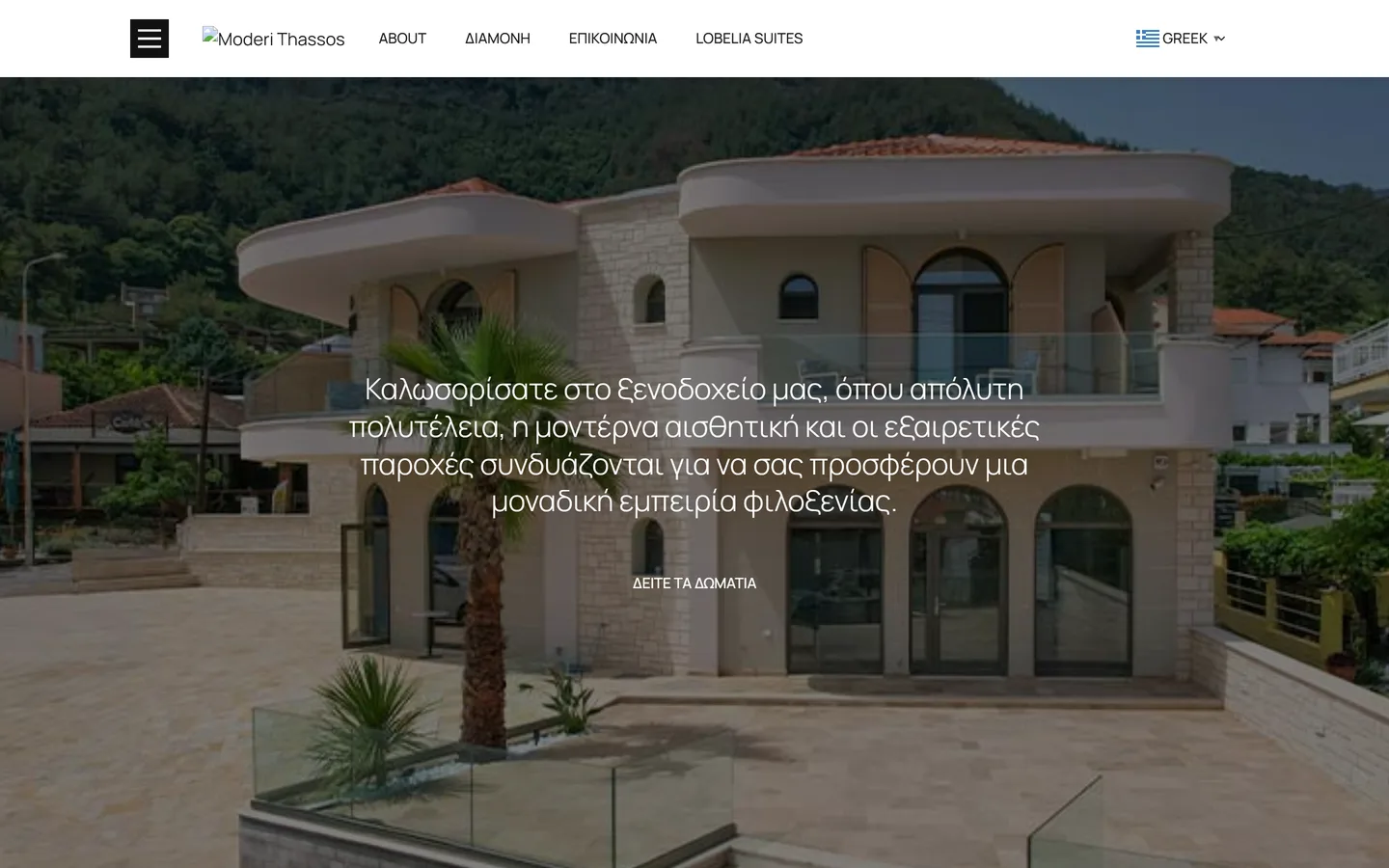 Accommodation
Moderi Thassos
Website & fast VPS hosting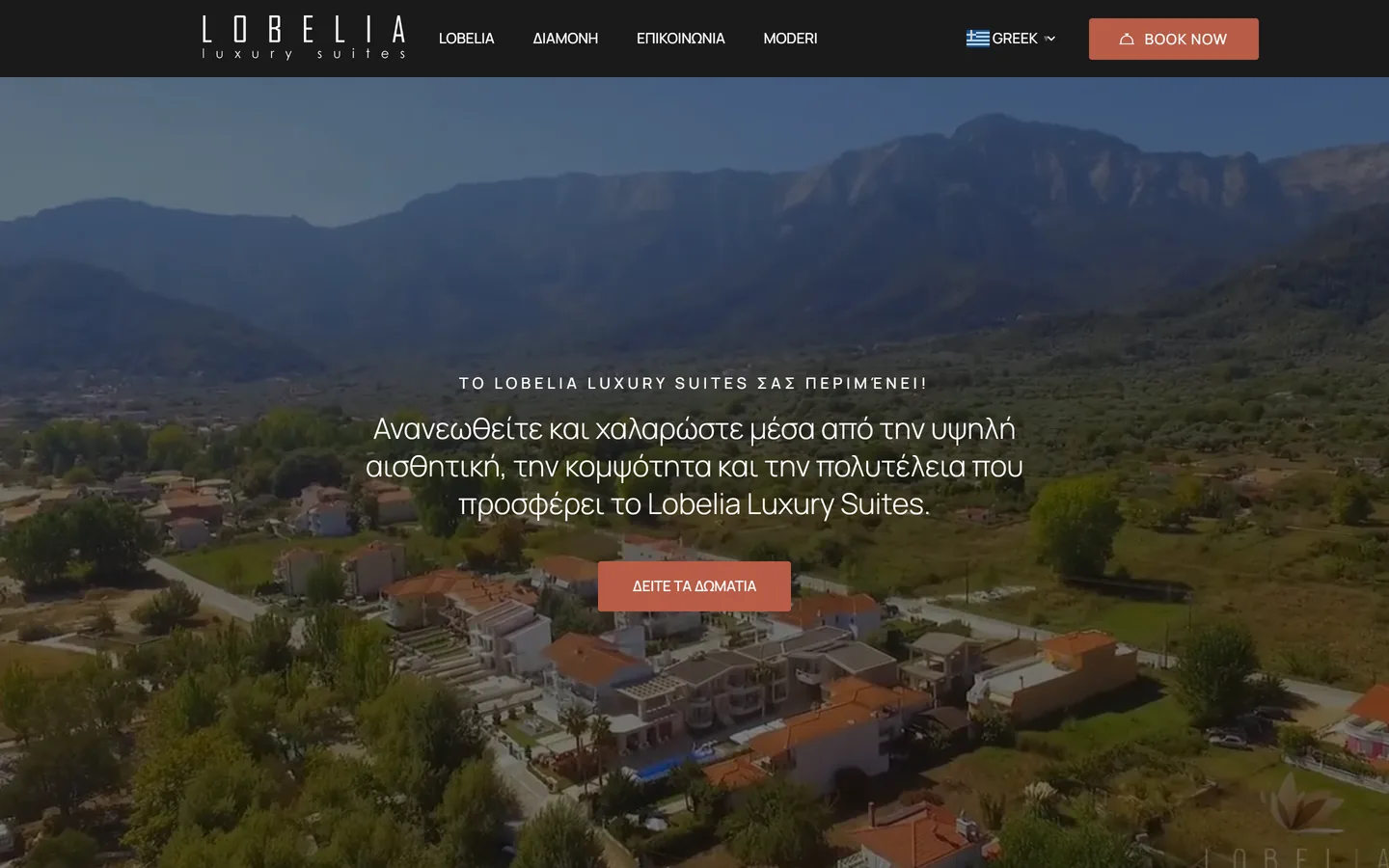 Accommodation
Lobelia Luxury Suites
SEO & technical SEOOur work in other sectors
Meta and Google campaigns on projects outside tourism, with published case studies.
Free guides for your hotel's advertising
What we use ourselves, out in the open.
AdsMeta & Google Ads Playbook 2026
The playbook we use in campaigns with real budgets, with Consent Mode v2 and the Conversions API.
Read → Meta Ads
Facebook & Instagram Ads: getting started
Setting up from scratch in the right order, for the traveller's inspiration phase.
Read → Google Business Profile
Local SEO & Google Business Profile
The profile inside which your Hotel Ads and Free Booking Links appear.
Read →Specialised services for hotels
See each service in detail.