
 Hotel
Hotel Hotels · Website
Hotel Website Development
A hotel website has one job: to close bookings without commission. Fast, multilingual, mobile-first, with the booking engine inside the flow rather than a third-party popup, with Hotel schema, booking tracking and hosting on your own VPS. Delivered in 6–10 weeks, before the season.
Booking engine in the flow Core Web Vitals & multilingual Live in 6–10 weeks
15–25%typical OTA commission per booking
560+clients since 2000
Hotel website development differs from every other business website in one respect: the site does not present, it sells. Every visitor who reaches it, whether from Booking.com where they saw you, from Google, or from a Reel, compares within seconds the rate, the photos and the ease of booking with the OTA open in the other tab. If the site loads slowly, does not speak their language or sends them to a foreign domain to book, they go back to the OTA and you pay typically 15–25% commission.
That is why we design a hotel website around the booking flow and not around a pretty template. Rooms with real photos and facts, a gallery that does not drag, location with directions from the port, reviews from Google and OTAs, offers for booking direct, and on every screen a "Book now" button that opens the booking engine inside the page, in the visitor's language and currency. Underneath: speed that passes the Core Web Vitals, hreflang per market, schema.org Hotel, GA4 and Meta with Consent Mode v2, and hosting on a VPS that survives August.
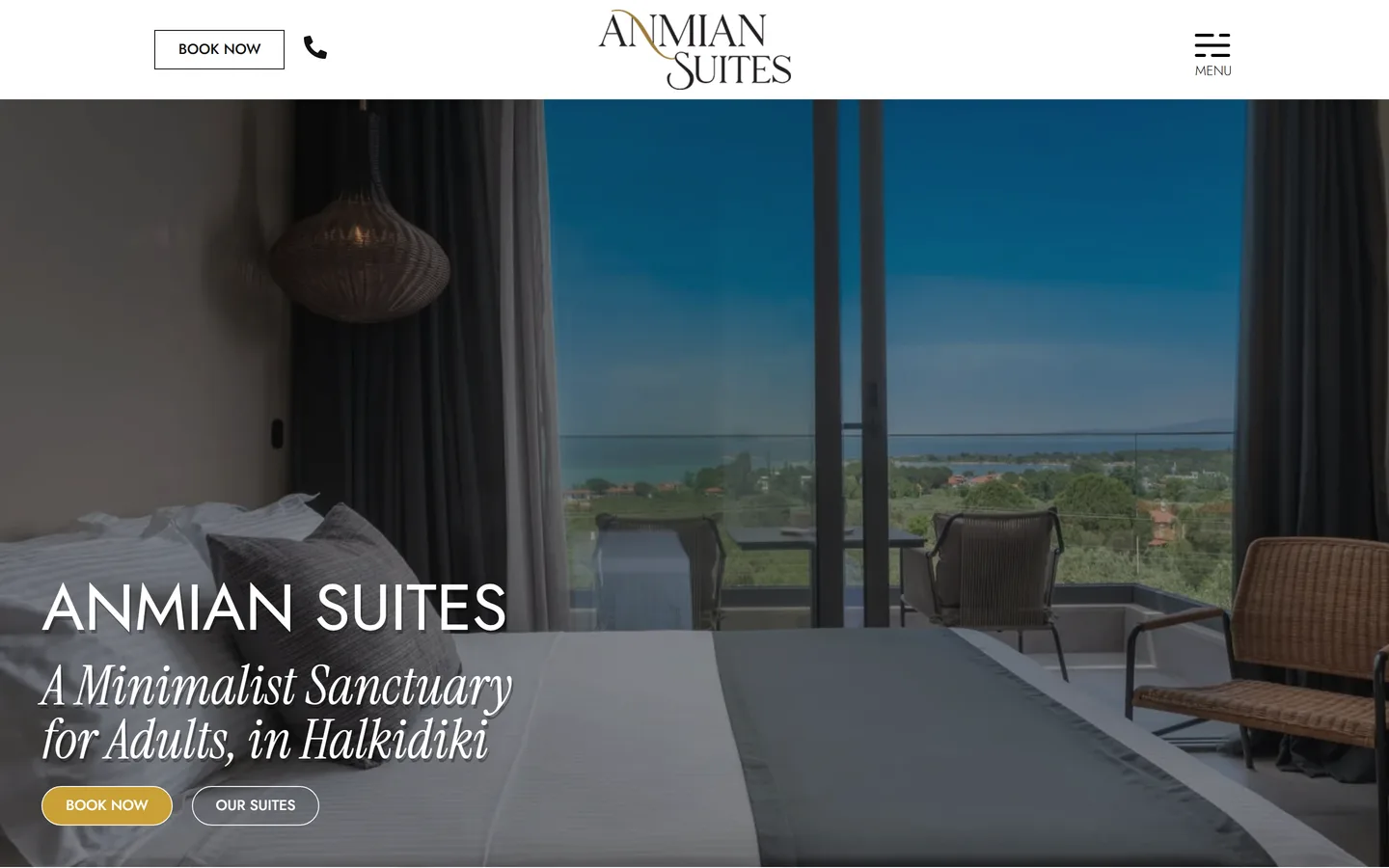
At Qbrains we have built websites since 2000 for 560+ clients, among them hotel properties such as Hilton Athens, The Met Hotel and Porto Palace and properties such as Anmian Suites, Moderi and Lobelia Luxury Suites in Thassos. On this page we explain what a hotel website that sells contains, how the booking engine is embedded, what speed means with 300 photos, WordPress or custom, and how we deliver in 6–10 weeks before the season.
What does a hotel website that sells contain?
The anatomy is almost always the same, and almost always something is missing. Rooms: one page per room type with real photos at two times of day, square metres, floor, view, beds, maximum guests, amenities and a button that opens the booking engine already filtered to that room. A gallery organised by area, not 200 images in a row. Location: map, distance and time from port, airport and the beaches, driving directions, transfer. Amenities and experiences: breakfast, pool, parking, pets, excursions, boat, whatever makes the stay more than a room.
Reviews from Google, Booking.com and TripAdvisor inside the page, with date and guest country, not three anonymous quotes. Offers for booking direct, written next to the rate and not hidden on their own page. An FAQ with the questions reception gets every day. And on every screen, fixed, the "Book now" button with the dates, because the visitor decides at any point of the page, not only on the homepage.
The common mistake is the "About us" page in first position in the menu and the rooms in third. The traveller did not come for the family history; they came to see where they will sleep and what it costs. The story has its place, further down, after they have seen the room.
How is the booking engine embedded in the page flow?
The difference between a website that closes bookings and a website that "has booking" is where the reservation system opens. In the second case the visitor taps "Book now", a popup or new tab opens on a domain they do not recognise, with different colours and a different language, and part of the audience goes back to Booking.com because at least there they know where they are. In the first case the booking engine opens inside the page, with the property's logo, colours and typography, on the same domain or a subdomain of yours (e.g. book.myhotel.gr), in the language and currency they were already reading.
The three-click flow is the goal: from any page, dates and guests in the first, room and rate with cancellation terms visible in the second, details and payment in the third. From a room page the booking engine opens already filtered to that room. Direct offers appear in the second step, next to the rate. There is no mandatory account creation. We explain the booking flow, rate parity and payment methods in detail on the direct bookings page.
We embed the booking engines and channel managers widely used in the Greek market and connect the tracking: every step of the booking sends an event to GA4 and to Meta, so you know that Tuesday's booking came from Hotel Ads and Thursday's from a Reel.
How does a page with 300 photos stay fast?
A hotel website is one of the heaviest categories of pages on the web: galleries, video, maps, a booking widget, three languages. And at the same time its visitor is on a phone, often on a foreign network, with Booking.com open next door. Google measures the experience with the Core Web Vitals: LCP (how quickly the main content appears, target under 2.5 seconds), CLS (whether the layout "jumps" while loading) and INP (how quickly it responds to a tap). A page that fails these loses both bookings and search positions.
We achieve it with specific techniques, not with "good hosting" in general. Photos in WebP or AVIF, in five sizes so the phone does not download the desktop image, with lazy loading for everything below the first screen and fixed dimensions so the layout does not shift. The homepage video compressed and muted, with a poster image. Minimal JavaScript, no five slider plugins. The map loads when the user scrolls to it. And the booking widget loads asynchronously, so it does not delay the first screen.
Underneath, hosting on your own VPS with server-side cache, HTTP/2 and a CDN for images, not shared hosting that splits resources with hundreds of other sites and goes down in August, when you have the most traffic. Daily backups, security updates and uptime monitoring. See VPS website hosting.
What lies under the page and brings bookings?
Six technical pieces the visitor does not see, but Google, Hotel Ads and GA4 do.
Multilingual with hreflang per market
Each language on its own URL (/de/, /en/, /it/), with hreflang telling Google which version is meant for which country, human translations and the booking engine following language and currency. Languages are chosen from last season's booking data.
Schema.org Hotel, HotelRoom & Offer
Structured data that describes the property, each room type, amenities, address, reviews and offers to Google and to AI engines. It is the basis for rich results, for the Google Business Profile and for ChatGPT to "understand" you when someone asks "where should I stay in Thassos".
Ready for Google Hotel Ads
Room pages and the booking engine are set up so your rate can feed Hotel Ads and Free Booking Links through the channel manager, with a landing page that opens directly on the dates the user searched. See Hotel Ads.
GA4 & Meta with Consent Mode v2
Events for every step of the booking (search, room, payment, completion with value), Meta Pixel and Conversions API, and Consent Mode v2 so measurement respects the visitor's cookie choices and stays reliable for campaigns.
Accessibility & WCAG basics
Colour contrast, alt text on every photo, keyboard navigation, labels on the booking form and button sizes for a thumb. It is not only an obligation; it is also why the site works on a sunny beach with one thumb.
Professional photography
A shot list per room and area, two times of light, breakfast, pool, view, a short homepage video. The material that decides the site more than any technical choice, and feeds the Google Business Profile, OTAs and social media all season.
WordPress or a custom website for a hotel?
The honest answer is "it depends on the size and on who will manage it", and we build both, so we have no reason to push you either way. For most properties up to a few dozen rooms, WordPress with our own theme, built for the property rather than an off-the-shelf template with 40 demos, is the right choice: your team changes texts, photos and offers on their own, the market's booking engines embed easily, and the maintenance cost is predictable. The price is that it needs updates and attention to plugins, which is why we pair it with maintenance.
Custom development makes sense for groups with several properties and shared management, for special PMS or CRM integrations, or when speed and security must be absolute with minimal maintenance, e.g. a static site fed by a headless CMS. It costs more up front, less in maintenance, and requires you to come to us for structural changes.
| Criterion | WordPress with our own theme | Custom / headless |
|---|---|---|
| Fits | Properties up to a few dozen rooms, villas, boutique | Groups, several properties, special integrations |
| Content management | By your team, no developer needed | Via CMS; structural changes by us |
| Booking engine | Embedding of the market's common solutions | Any integration, including PMS APIs |
| Speed | Very good with the right theme, VPS and cache | Excellent, especially with static generation |
| Maintenance | Regular updates and plugin checks | Minimal, rare updates |
| Multilingual | With proven translation tools and hreflang | In the structure from the start |
In both cases the website is yours: code, content, domain and hosting in your name, with no "rented" platform that takes the site with it if you leave. See how we approach website development in general.
Free for hotels & holiday properties
Free technical audit of your hotel website
Within 48 hours we send you how your website performs on speed, mobile, booking engine and languages, with the three things we would change first before the season.
What you get
- Core Web Vitals on mobile (LCP, CLS, INP) measured on the homepage and a room page
- Test of the booking flow: how many clicks, does it open on your domain, language and currency, direct perk
- Check of languages and hreflang: does the German visitor see the German version on Google?
- Check of Hotel schema, GA4 tracking and what ChatGPT and Gemini say about you
How long does development take and when should you start?
A hotel website project takes six to ten weeks from approval of the proposal, depending on the number of rooms, the languages and whether photography exists. The timeline has seven overlapping phases: analysis of the booking mix, destination competitors and structure; mobile-first design; development; content, photography and translations; booking engine and channel manager integration; SEO, schema, tracking and testing; launch with redirects from the old site so no Google position is lost.
What matters is not the weeks but the launch date. For a seasonal property the website must be live, translated and measurable before the season's booking window opens, that is in January, when the German and UK markets begin to compare. That means starting in autumn, when the property closes and the owner has time for photography, texts and decisions. A website delivered in June misses the season it was built for.
After launch we do not stop: maintenance and support with updates, backups, speed and uptime monitoring, small content changes and a check that the booking engine and tracking keep working after every update. See website support.
How do we work on a hotel's website?
Seven phases, one date that counts: the launch before the season.
1
Analysis & architecture
Booking mix per channel and market, competitors in the destination, what the traveller sees when searching your name, existing PMS and booking engine. We define languages, page structure and what carries over from the old site.
2
Mobile-first design
We design the phone screen first, with the booking button fixed, rooms first and the three-click flow. You approve prototypes, not descriptions.
3
Development, content & languages
WordPress with our own theme or custom, depending on the analysis. In parallel, photography with a shot list, texts per room and human translations, with hreflang per market.
4
Booking engine, SEO & tracking
Booking engine and channel manager embedded in the flow, Hotel/HotelRoom/Offer schema, GA4 and Meta with Consent Mode v2, Core Web Vitals speed, accessibility and testing on real phones.
5
Launch, hosting & maintenance
Live site on your own VPS with redirects from the old one, submission to Google and connection to Hotel Ads. Then maintenance with updates, backups and a check that booking and tracking work every season.
A hotel website that closes bookings before the season
Request a proposal for building or redesigning your property's website, with booking engine, languages and a timeline.
Request a Proposal →Frequently asked questions about hotel websites
What hoteliers ask before we start.
What must a hotel website have to bring bookings?
Seven things: a page per room type with real photos, square metres, floor and view; a gallery that loads fast; location with a map and directions from the port or airport; amenities and experiences; reviews from Google and Booking.com; current offers for booking direct; and a "Book now" button visible on every screen that opens the booking engine inside the page rather than on a foreign domain. Everything else is secondary.
WordPress or a custom website for a hotel?
For most properties up to a few dozen rooms, WordPress with our own theme (not an off-the-shelf template) is the right answer: your team changes texts, photos and offers on their own, and the market’s booking engines embed easily. Custom development makes sense for groups with several properties, for special PMS integrations, or for systems that must be extremely fast with minimal maintenance. We tell you honestly which fits, because we build both.
Can you embed the booking engine I already have?
Yes. We embed the booking engines and channel managers widely used in the Greek market so the availability search starts from every page of the site and the booking completes with your branding, on your domain or a subdomain of yours. We also set up the booking events in GA4, so you know which channel each booking came from. If you do not have a booking engine, we recommend a solution based on your size and PMS.
How many languages will the website have?
As many as the markets that bring you bookings: usually Greek, English and one or two more (German, Italian, Serbian, Bulgarian, Romanian) depending on last season’s data. Each language has its own URLs, hreflang tags that tell Google which version is meant for which market, and human translations, not automatic ones. The booking engine follows the visitor’s language and currency.
How fast does a hotel website with many photos need to be?
Fast enough to pass Google’s Core Web Vitals on mobile: main content visible in under 2.5 seconds (LCP), no layout shifts (CLS) and immediate response to taps (INP). We achieve it with photos in WebP or AVIF at several sizes, lazy loading for everything below the first screen, minimal JavaScript and hosting on a fast VPS with caching. Heavy galleries are not an excuse; they are the problem we solve.
How long does development take and when should I start?
Six to ten weeks from approval of the proposal, depending on the number of rooms, languages and whether photography already exists. The goal is always to launch before your season’s booking window: for a seasonal property that means starting in autumn and going live in January, when the German and UK markets begin to compare.
What about photographing the property?
It is the part that decides the website more than any technical choice, and the one most often missing. We organise a professional shoot with a shot list per room type, common areas, breakfast, pool, view at two times of day and a short video for the homepage. The same material feeds the Google Business Profile, the OTAs and social media for a whole season.
What does maintenance after launch include?
Security and version updates, daily backups, uptime and speed monitoring, small content changes (offers, amenity prices, new photos) and a check that the booking engine and tracking keep working after every update. The maintenance and hosting package is agreed separately. See website support and VPS hosting.
Our hotel projects
Properties in Thassos for which we have delivered the website, hosting or SEO.
Hotel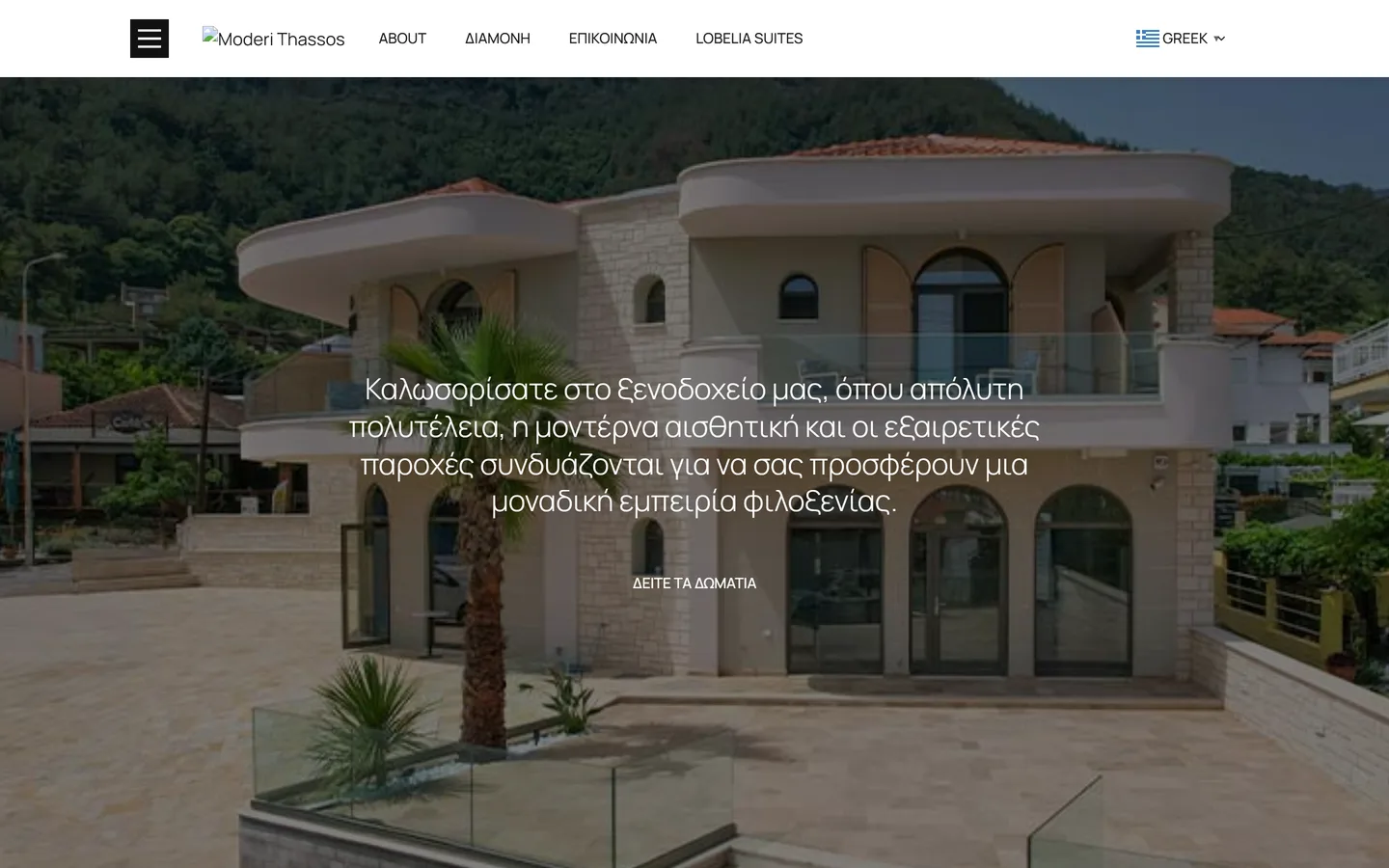 Accommodation
Moderi Thassos
Website & fast VPS hosting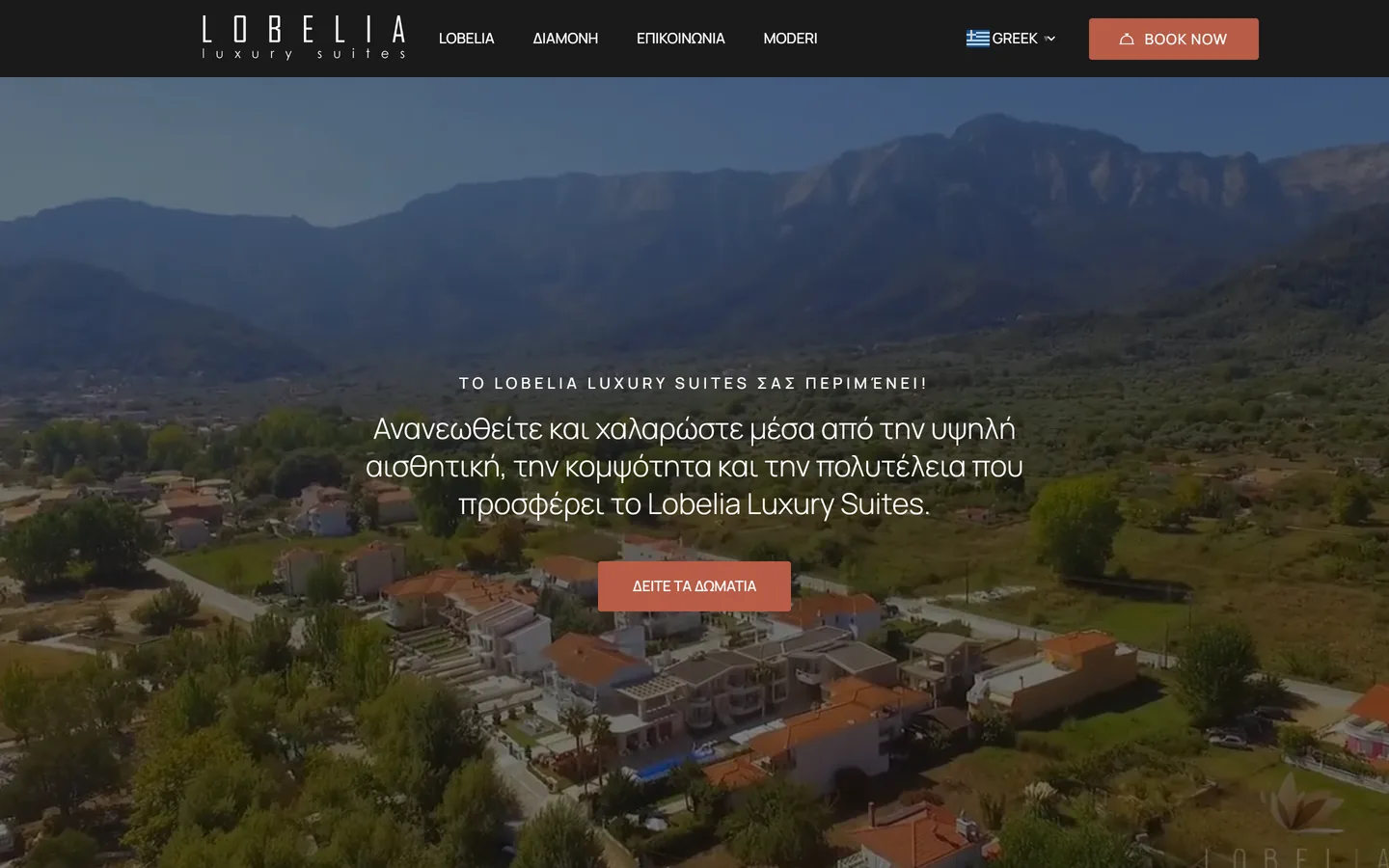 Accommodation
Lobelia Luxury Suites
SEO & technical SEOOur work in other sectors
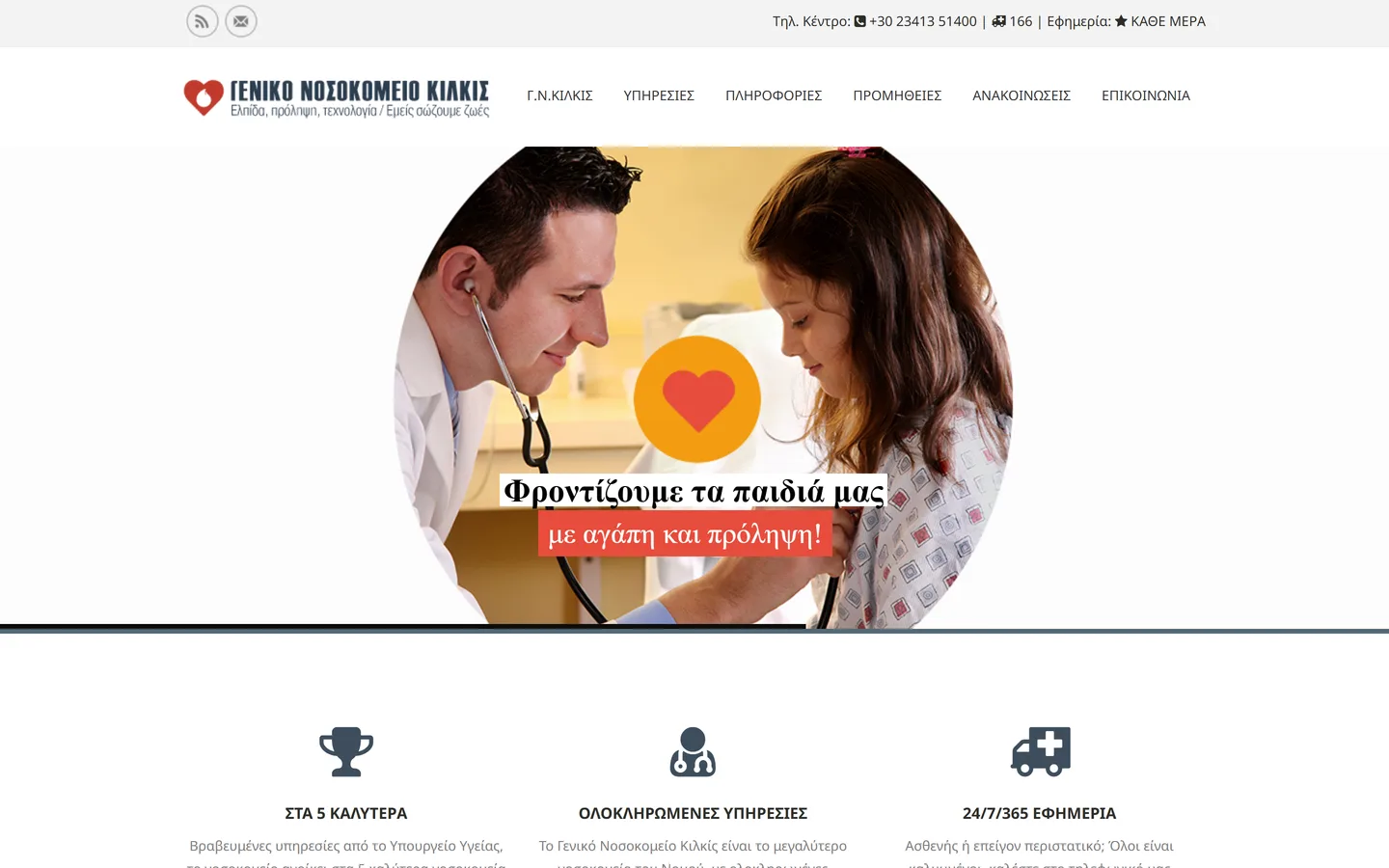
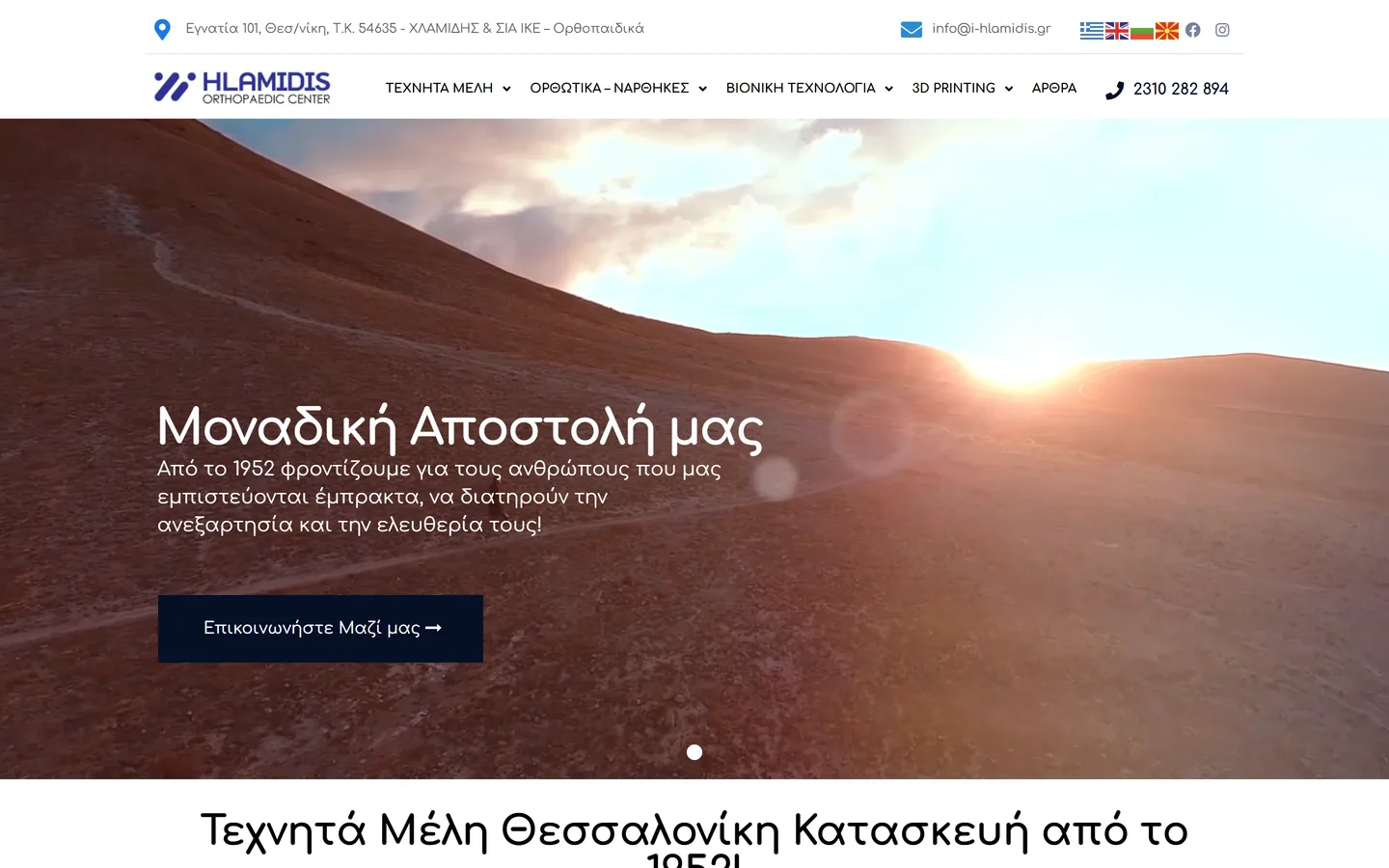
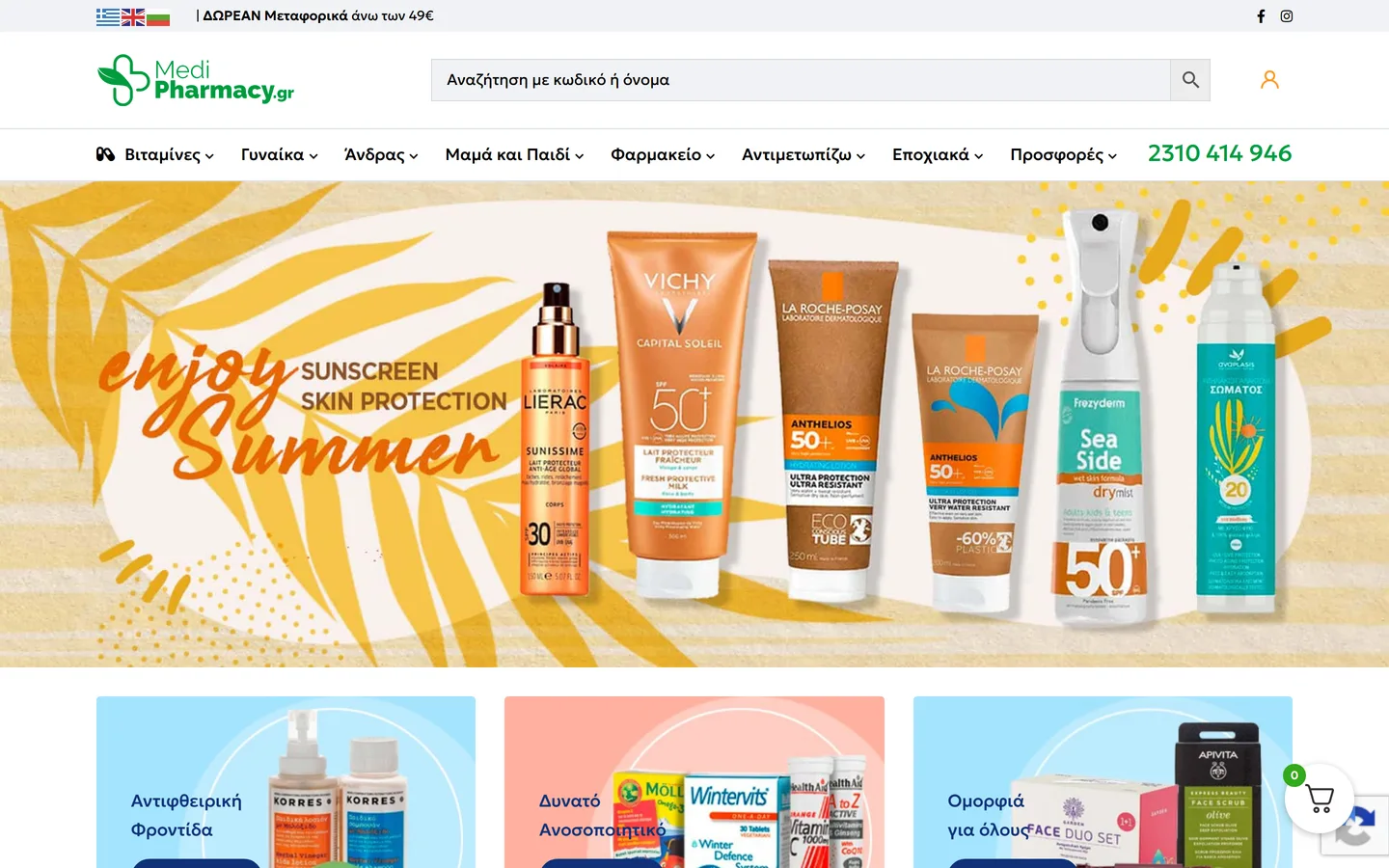
Websites with measurable speed and results, for businesses outside tourism.
Free guides for your hotel
What we use ourselves, in the open.
 SEO 2026
SEO & technical performance
Technical SEO, speed, Core Web Vitals and the structure Google rewards.
Read → Local SEO
Local SEO & Google Business Profile
What every property with a map, photos and reviews needs to get right.
Read → Ads
AdsMeta & Google Ads Playbook 2026
How we set up tracking, Consent Mode v2 and campaigns that bring bookings to your site.
Read →Specialised services for hotels
See each service in detail.