
 Hotel
Hotel Hotels · Direct bookings
Hotel Direct Bookings & Booking Engine
Every OTA booking costs you typically 15–25% of the room rate. We connect booking engine, channel manager and PMS into the flow of your website, build the "book direct" reason within the limits of rate parity, and measure share of direct, cost per booking and ADR per channel.
Booking engine in your site's flow Channel manager & PMS Rate parity & direct perks
15–25%typical OTA commission per booking
26years of experience
Hotel direct bookings are the reservations completed on your own website, through your own booking engine, with no commission to Booking.com, Expedia or any other OTA. The difference is not only the typically 15–25% of the room rate that stays with you. It is that the guest's email, the date of their next stay and the relationship belong to the property and not to the platform.
OTAs are not the enemy. They are a visibility channel in markets you would hardly reach on your own, and the "billboard effect" works in your favour: the traveller sees you on Booking.com, searches your name on Google and, if they find a reason, books on your website. The point is for the website to be ready to receive them: with the booking engine in the flow rather than a third-party popup, with a clear perk for booking direct, and with three steps from the phone to the confirmation.
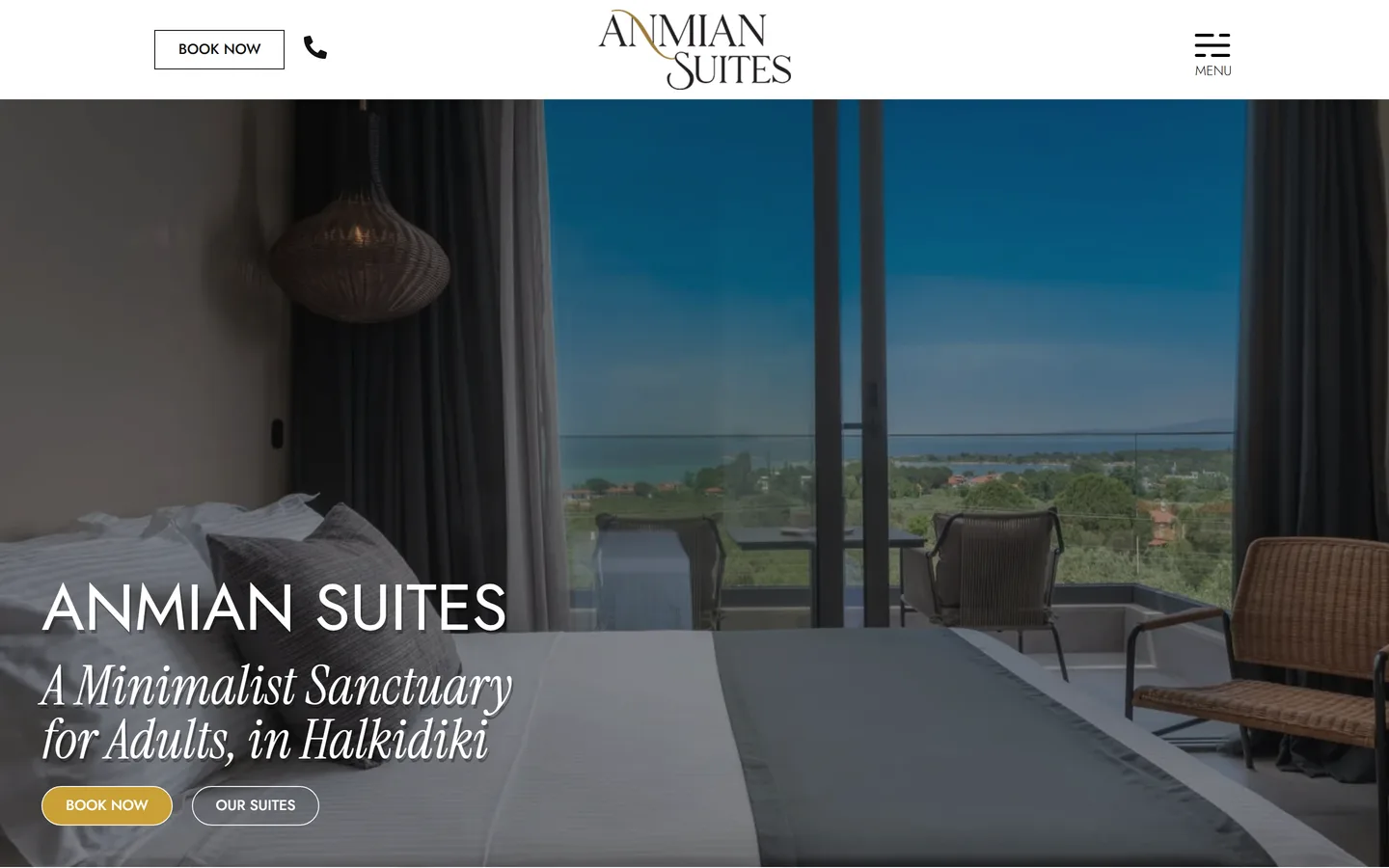
At Qbrains we set up and measure direct-booking strategies for properties of every size, from Hilton Athens, The Met Hotel and Porto Palace to Anmian Suites, Moderi and Lobelia Luxury Suites in Thassos. We do not sell our own booking engine, so we tell you what works without any reason to push you somewhere. On this page we explain the architecture, the rules of rate parity, the booking flow that does not lose users, and the indicators that show whether it is working.
How do PMS, channel manager, booking engine and OTAs connect?
The architecture has four parts and one principle: one room inventory, updated everywhere in real time. The PMS (Property Management System) is the heart: that is where rooms, rates, bookings and guests live. The channel manager takes availability and rates from the PMS and pushes them to every sales channel, Booking.com, Expedia, Airbnb, Google, and sends every new booking back, so the room closes everywhere at once. The booking engine is the sales channel of your own website, the only one with no commission.
In the Greek market, the widely used booking engines and channel managers are designed either for properties with a few rooms, on a monthly fee, or for hotel groups, often as all-in-one platforms that include a PMS. We have integrated most of them. The part that is almost always neglected is not the choice of tool but the check of the synchronisation: does a room booked on Booking.com disappear from your website within minutes? Does a rate change in the PMS reach every channel? If not, an overbooking in mid-August is only a matter of time.
The same network also feeds Google: through the channel manager or the booking engine your rate reaches Google Hotel Ads and Free Booking Links, so that your "Official site" rate appears next to Booking.com. Without that connection, the traveller searching for you by name sees only the OTAs.
What does rate parity allow, and what can you offer direct?
Most OTA contracts include rate-parity clauses: you do not publicly advertise a rate lower than the one shown on the platform. That is why the advice "just sell cheaper on your website" usually cannot be applied, and why parity is often broken the other way round, by the OTA itself, when programmes such as Genius or mobile rates cut your price without your knowledge. That is why we regularly check what rate the traveller sees on Booking.com for three typical dates and compare it with your website.
Parity, however, concerns the public rate. It does not concern what you give on top, nor what you give privately. On top: breakfast included, flexible or free cancellation with more lenient terms, free transfer from the port or airport, early check-in or late check-out, a room upgrade subject to availability, parking, an excursion or a dinner. Privately: member rates for people who sign up to the newsletter or log in, which are not public and therefore are not compared with the OTA's public rates. And for guests who have already stayed, a return offer in their inbox the following spring.
The goal is for the traveller to have a specific, visible reason to book with you, written next to the "Book now" button and in the first step of the booking engine, not hidden on an "Offers" page. That reason is built together, with your contract open in front of us.
What does a booking flow that does not lose users look like?
Most direct bookings are not lost on the homepage. They are lost inside the booking engine, at steps nobody at the hotel has gone through on a phone. A flow that works has three steps: dates and guests, room and rate, details and payment. The same rules apply at every step. Price transparency: the total price with taxes and the accommodation tax from the first step, no surprise at the end. Cancellation terms visible next to every rate, not behind a link. No mandatory account: the visitor books as a guest and, if they wish, registers afterwards. The visitor's language and currency, automatically.
At payment we offer what each market expects: Visa, Mastercard and American Express cards, Apple Pay and Google Pay on mobile, and for the Greek market bank transfer or IRIS where it fits the property's profile. The deposit policy is written clearly: percentage or first night, when the balance is charged, what happens on a no-show. The confirmation arrives immediately by email and, where requested, by SMS or WhatsApp, and the booking lands in the PMS with no manual entry.
The booking engine opens inside your website, with your logo, colours and typography, on the same domain or on a subdomain of yours, not on a foreign domain that makes the visitor wonder where they ended up. And for those who leave at step 2 or 3 we set up recovery: an email within a few hours with the dates and a link that returns them to the same step (provided they gave an email and consent), and retargeting on Meta and Google within the booking window.
How do we measure whether the direct strategy is paying off?
Six indicators we look at every month and compare season to season. Not impressions: numbers from the PMS and GA4.
Share of direct
The percentage of bookings and revenue that came through the booking engine out of the total. The core indicator of the strategy, with a per-season target set realistically from the starting point, not from wishful thinking.
Cost per booking per channel
For OTAs it is the commission. For direct it is the advertising cost (Hotel Ads, Search, Meta) plus card fees and the share of the booking engine's cost. The comparison shows where the next euro is worth spending.
ADR per channel
The average daily rate per channel shows whether direct bookings come in at a better rate or whether discounts are eating the commission saving. Together with occupancy it gives RevPAR per channel.
Booking engine conversion
From the availability search to the completed booking, per step and per device. GA4 shows at which step the user leaves, and that is where we intervene before increasing traffic.
Repeat guests
How many of those who stayed book again, and through which channel. The guest who came from an OTA and returns through your newsletter is the cheapest booking you will ever make.
Rate parity & visibility
A check that your rate does not appear higher than the OTAs for typical dates, and that your "Official site" rate shows in Google Hotel Ads and Free Booking Links next to Booking.com.
How does the OTA guest become your own customer?
The commission is the visible difference between an OTA booking and a direct one. The invisible one is the data. When the booking is made through a platform, the guest's email belongs to it and you communicate with them only through its channels, until they leave the room. With a direct booking you own the relationship: you can send arrival information before the trip, suggest an upgrade or a transfer, ask for a review at the right moment and remember the guest the following spring with an offer for the same dates.
Even the guest who came through an OTA can become yours for the next time, provided you ask for their email and consent for the newsletter at check-in or on the Wi-Fi login, in the way GDPR requires. We set up those flows, from the pre-arrival email to the return offer, and automate them so they run without anyone at reception having to remember. See what AI automates on the hotel marketing page and in our AI services.
And to know that all of this is paying off, the booking engine sends GA4 events for every step (availability search, room selection, payment start, completion with value and booking reference) and Meta events through the Conversions API, with Consent Mode v2 so that measurement respects the visitor's cookie choices. That way every booking is attributed to its channel: Hotel Ads, Search, Meta, social, newsletter or organic search.
Free for hotels & holiday properties
Free booking flow & rate parity check
Within 48 hours we send you what the traveller sees and experiences when trying to book direct with you, from searching your name to the payment.
What you get
- Test of the booking flow on a phone: steps, speed, price transparency, payment methods, abandonment points
- Rate parity check on Booking.com and Expedia for three typical dates
- Does your "Official site" rate appear in Google Hotel Ads and Free Booking Links?
- Check of booking tracking in GA4: do you really measure which channel brings each booking?
How do we work on a hotel's direct bookings?
From the synchronisation check to the report per channel.
1
Architecture & mix audit
We record PMS, channel manager and booking engine, test the availability sync, read the OTA contracts and look at bookings, commissions and ADR per channel for last season. We set a share-of-direct target.
2
Booking engine in the site's flow
We embed the reservation system inside the website, with your branding, in three steps, with guest checkout, price transparency and each market's payment methods. If a new website is needed, see hotel website development.
3
Direct perk & rate visibility
We design the "book direct" reason within the limits of parity, write it next to the booking button, and connect your rate to Google Hotel Ads and Free Booking Links so it appears next to the OTAs.
4
Tracking, recovery & newsletter
GA4 and Meta events per step with Consent Mode v2, abandonment recovery emails, pre-arrival and follow-up flows, newsletter consent collection and AI automations for confirmations and questions.
5
Monthly report & next season
Share of direct, cost per booking, ADR per channel, booking engine conversion and a parity check every month. After the season we rewrite the target and the plan with the real numbers.
Keep the commission in your hotel
Request a proposal for booking engine, channel manager and a direct-booking strategy based on your own booking mix.
Request a Proposal →Frequently asked questions about direct bookings and booking engines
What hoteliers ask before we start.
What is a booking engine and how does it differ from an OTA?
The booking engine is the reservation system of your own website: it shows availability and rates, takes the payment and sends the booking to your PMS. An OTA (Booking.com, Expedia) is a third-party platform that sells your room to its own audience and keeps a commission, typically 15–25%. With the booking engine, the booking, the guest’s email and the relationship belong to you. With the OTA, they belong to the platform.
Can I offer a lower rate on my website than on Booking.com?
It depends on your contract. Many OTA contracts include rate-parity clauses that prevent you from publicly advertising a lower rate. That does not, however, restrict the perks you give to those who book direct: breakfast, flexible cancellation, free transfer, late check-out, room upgrade, nor the closed rates for newsletter members, which are not public. We read your contract and build the "book direct" reason within its limits.
Do you connect the booking engine and channel manager I already have?
Yes. We do not sell our own system, so we have no reason to switch your tools. We embed the booking engines and channel managers widely used in the Greek market into the flow of your website, check that availability really syncs with the PMS and the OTAs, and set up booking tracking. If you do not have a solution yet, we recommend one based on the size of your property and your PMS.
Will I get overbookings if I sell both on my site and on the OTAs?
No, as long as there is a channel manager in the middle. The channel manager keeps a single room inventory and updates it across all channels in real time: when a room is booked on Booking.com it closes on your website too, and vice versa. Overbooking happens when channels are updated by hand or when one of them is out of sync. Checking that connection is the first thing we do.
How many steps should a booking take on a phone?
Three: dates and guests, room and rate with the cancellation terms visible, details and payment. No mandatory account creation, the total price and taxes shown from the first step, and the booking engine opening inside your website, in the visitor’s language and currency, not on a foreign domain that makes them wonder where they ended up.
What happens with people who start a booking and leave?
If the visitor gave an email and consent before abandoning, we send an email within a few hours that reminds them of the dates and the room, with a link that returns them to the same step. Without an email, we find them again with retargeting on Meta and Google, within the booking window. Most important, though, is to learn from GA4 at which step they leave and why, and fix that step.
How do we measure whether the direct strategy is paying off?
With three indicators per month and per season: the share of direct bookings in the total (share of direct), the cost per booking per channel (OTA commission versus advertising cost and card fees for direct) and the average daily rate (ADR) per channel. The data comes from the PMS and from GA4, where the booking engine sends events with the booking value, so we know which channel each euro came from.
Does this work for a small property with ten rooms?
Yes, and it often pays off more, because in a small property every commission is a larger share of net profit. There are booking engines and channel managers designed for properties with a few rooms, on a monthly fee rather than a commission. The logic is the same: embed in the website, a clear direct perk, Free Booking Links on Google and measurement, just at a smaller scale and budget.
Our hotel projects
Properties in Thassos for which we have delivered the website, hosting or SEO.
Hotel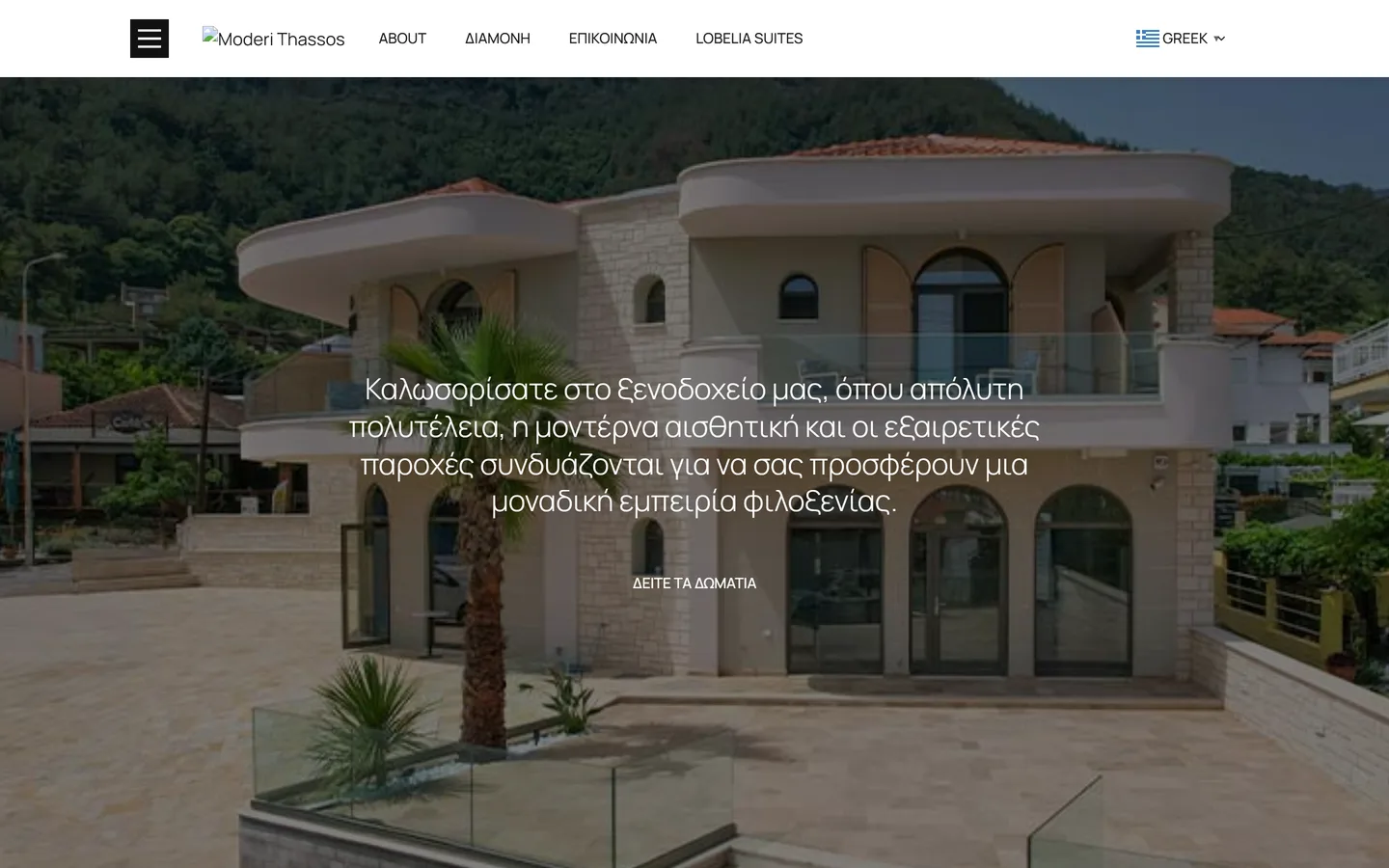 Accommodation
Moderi Thassos
Website & fast VPS hosting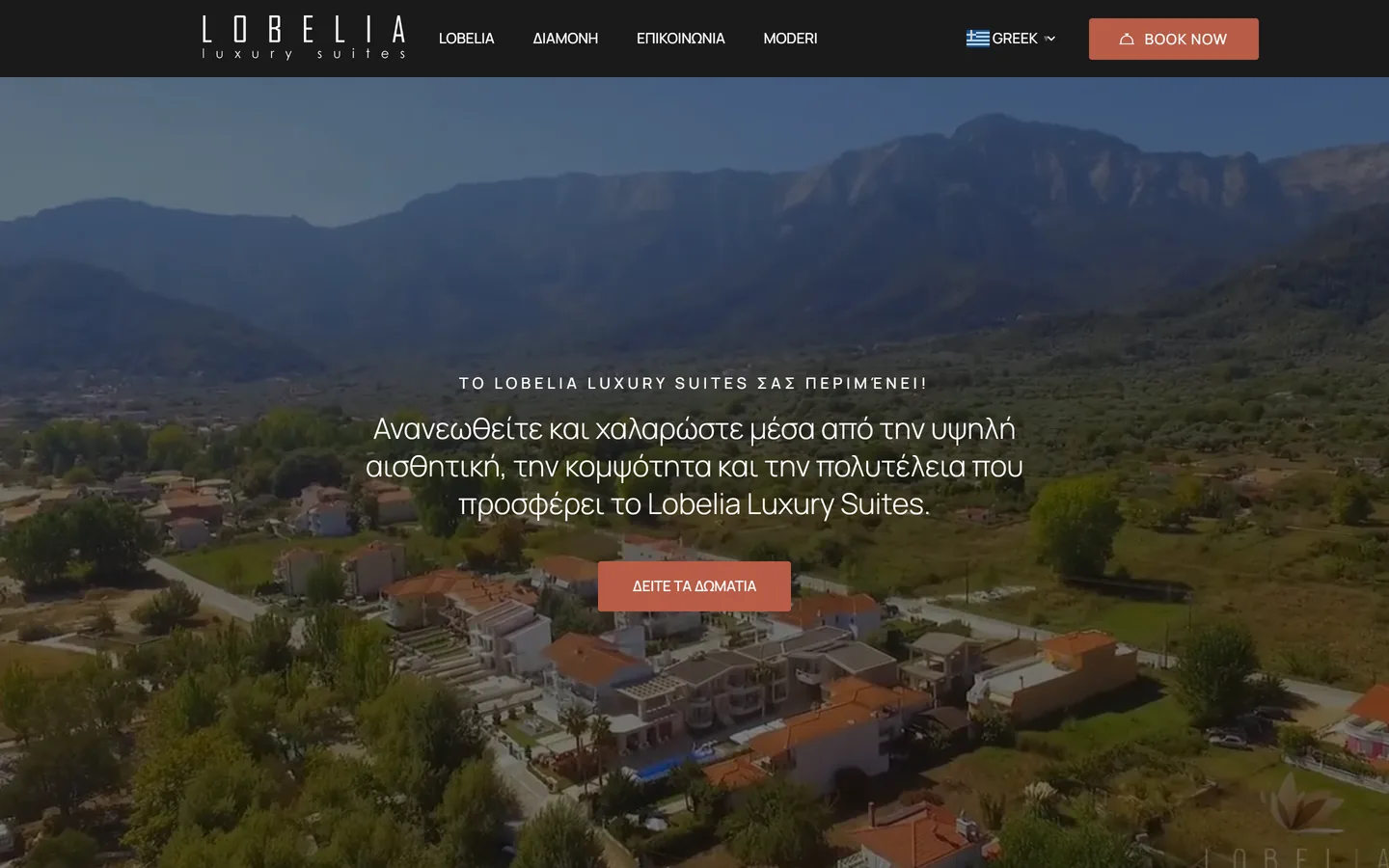 Accommodation
Lobelia Luxury Suites
SEO & technical SEOOur work in other sectors
Sales flows and per-channel measurement, for businesses outside tourism.
Free guides for your hotel
What we use ourselves, in the open.
 Ads
AdsMeta & Google Ads Playbook 2026
How we set up tracking, Consent Mode v2 and campaigns that bring bookings to your site.
Read → Local SEO
Local SEO & Google Business Profile
The profile the traveller sees when searching your name, before choosing OTA or website.
Read → SEO & GEO
SEO & GEO: visibility in Google, ChatGPT & Gemini
How a hotel shows up when the traveller asks "where should I stay in Thassos".
Read →Specialised services for hotels
See each service in detail.